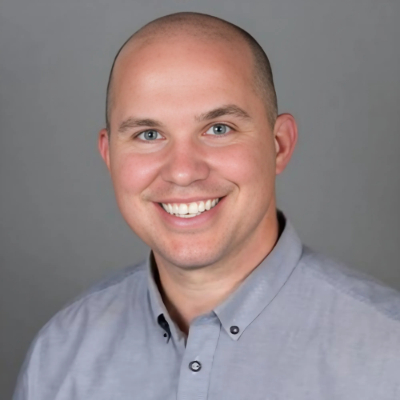
Marketing success starts long before the first ad runs or the first piece of content goes live. In this Q&A, Tyler Jordan, founder of Jordan Digital Marketing, shares how clear positioning and consistent messaging create the foundation for sustainable growth. He discusses aligning paid and organic strategies, the evolving role of answer engine optimization (AEO), and why brand mentions earned through PR can have an outsized impact on AI search visibility. He also offers insight into the tools and partnerships helping businesses navigate this changing landscape.
Can you tell us a bit about your background and what led you to found Jordan Digital Marketing?
I originally wanted to work in traditional advertising, but ended up falling into paid search—which was probably the most fortuitous thing that could have happened, since digital marketing was on the upswing. I worked at an agency, then a couple of startups. After my second startup crumbled for reasons outside my control, I’d already started an LLC on the side, and a former co-worker wanted to hire me to run her paid ads. Out of my first five pitches, hers was actually the only one I didn’t close; her CEO brought in someone else at the last minute. I thought I’d freelance for six months to a year. That was almost nine years ago.
Now we have an amazing team covering paid media and organic growth: Google Ads, Facebook, LinkedIn, SEO, AEO, and content strategy. Our mission is to bring in-house expertise to an agency setting. A lot of agencies default to a checkbox approach. We try to deeply understand our clients’ problems and find creative ways to solve them.
What separates brands that communicate clearly and effectively from those that struggle to break through the noise?
It comes down to foundational work. The businesses I see fail are the ones that skip the fundamentals: clear branding, positioning statements, a defined audience. Without those, you’re spending money on a losing battle. And if you don’t have a clear, consistent message, you’re not building anything. You’re just talking to people differently a bunch of times.
The companies that break through are the ones that stay on message and repeat it. They deeply understand who they are, what problem they solve, and who they’re solving it for. A lot of companies try to skip that foundational layer and jump straight into paid media or influencer marketing, and it almost always ends up being a house of cards.
How do you approach aligning paid and organic to deliver a consistent message across channels?
I think of a company’s marketing progression in layers. First, build the foundational pieces: brand identity, messaging, positioning, audience definition. Then make sure your lifecycle and conversion infrastructure is in place before you start driving traffic. From there, invest in organic content strategy, because that’s what compounds over time.
I think of organic as a glacier melting at the top of a mountain. It starts as a trickle, but eventually becomes a rushing river that keeps flowing. Paid media is the opposite: turn the faucet on, get customers quickly; turn it off, and they’re gone. There’s no compounding benefit.
That said, both channels should be pulling from the same foundational strategy and messaging. When SEO and paid are aligned, you get a compounding effect from them running in tandem. Internally, we bring both teams together quarterly to review results and align on the upcoming quarter, and we’re constantly sharing learnings on the back end, because what works in one channel often informs the other.
One thing we’ve had to push back on recently is the expectation that SEO or AEO will drive a surge of conversions within the first month. At that point, you’re still at the trickle stage. It takes time to build toward the rushing river, but once you get there, it keeps flowing.
Can you tell us about your recent tech partnerships with Profound and AITS?
Profound is essentially the Google Analytics of AI search—the premier tracking solution in the space. We were one of their pioneering partners when they were a small startup taking calls from the hallway. Now they’re 200 people with features shipping constantly. Having them as a partner means we’re not just learning from them, but sharing knowledge in both directions.
Profound is a powerful tool, but the learning curve is steep. We help clients get up to speed quickly so they can start extracting value from it right away, because once you understand it, the insights are exponential.
AITS is a great complement to that. They’re more on the technical side: automating early technical audits so we can quickly surface the biggest issues and prioritize accordingly, plus ongoing monthly tracking to measure progress. Both Profound and AITS get turned on day one for most of our accounts. They’re both essential to how we run our AEO programs.
What are your thoughts on AEO, and how do you see it impacting digital marketing going forward?
First: don’t throw out traditional SEO. The majority of search traffic, conversions, and information discovery still happens on Google. But what we’re seeing is that for highly considered purchases like B2B, SaaS, FinTech, and AI tools, people are turning to AI platforms for long, in-depth conversations to educate themselves before buying. What used to take over 50 Google searches now happens in one AI conversation.
Two clients that illustrate this well: Pilot, a bookkeeping service in FinTech, and Baby Leto, a baby crib brand. Both are highly considered purchases, and both have seen significant AEO impact because people research those decisions extensively before committing.
AEO still makes up a relatively small percentage of total search volume, but it’s growing fast, and the intent level is exceptionally high. Users coming in through AI search are more educated, more ready to buy, and converting at higher rates than traditional search traffic.
The biggest gap right now is attribution. We can track visibility, citations, and share of voice through tools like Profound, and we use GA to analyze click-through and conversion rates from cited traffic. But the full revenue picture is still fuzzy. We’ve also been encouraging clients to use post-conversion surveys to capture what’s driving direct traffic, an old tactic that’s making a comeback because of how much dark traffic AI tools create.
On the strategy side, brand mentions are the single biggest lever for AEO performance. More impactful than any technical fix. If you can earn quality placements through PR, that moves the needle faster than anything else. The technical work (making sure your content can be crawled and chunked effectively by AI) is the foundation. But trust within AI systems is built through mentions across other authoritative sources. Social proof, essentially, just at a much larger scale.